Server Functionality
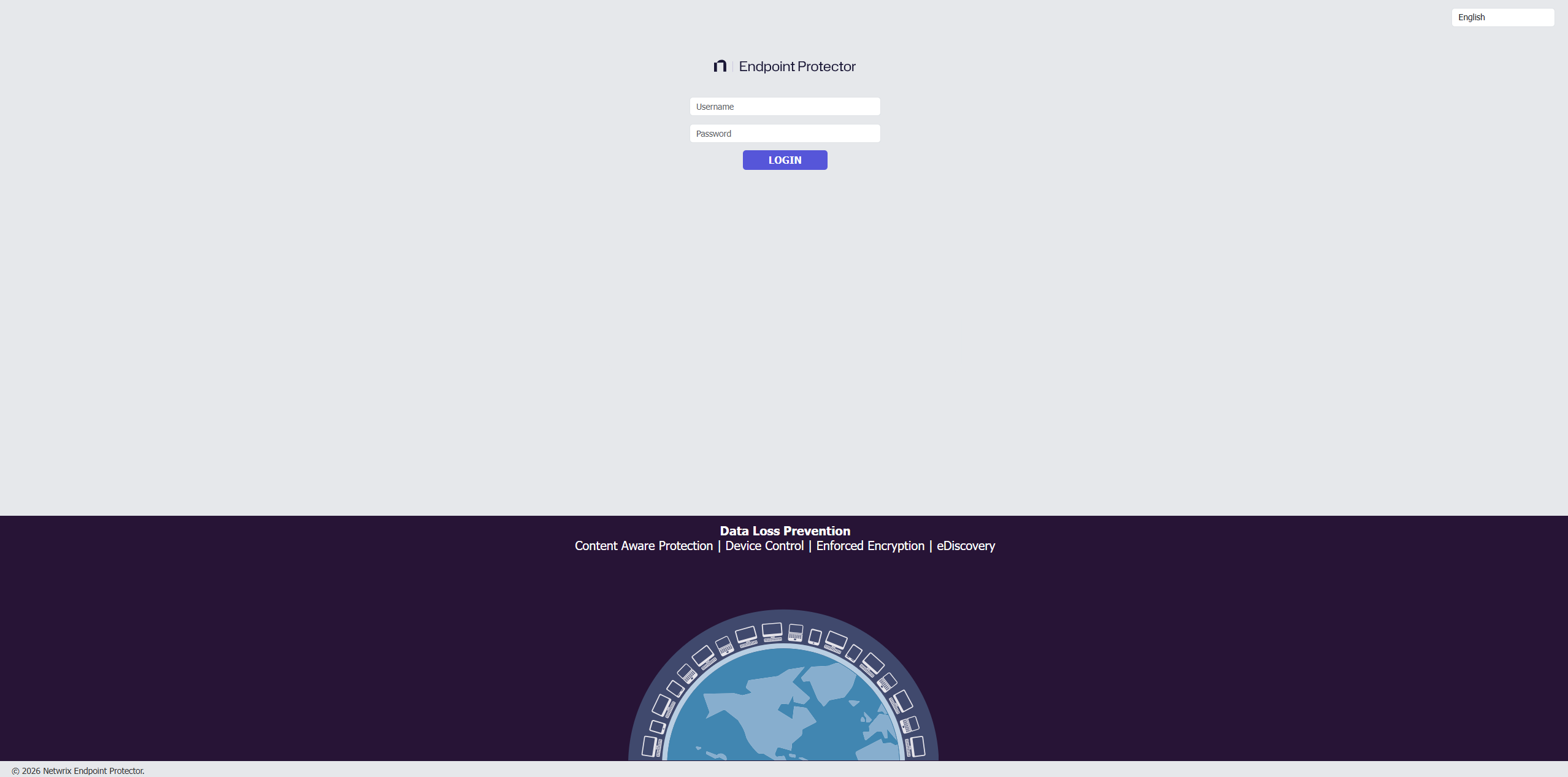
After the Endpoint Protector Hardware or Virtual Appliance setup is complete, access the User Interface from the assigned IP address.
Use your assigned Appliance IP address, for example, https://192.168.0.201.
Always use the IP address with HTTPS (Hypertext Transfer Protocol Secure).
Use the default login credentials for the root account. To obtain the password, submit a support ticket through the Netwrix Customer Portal.
To configure settings or create administrators, see System Configuration.
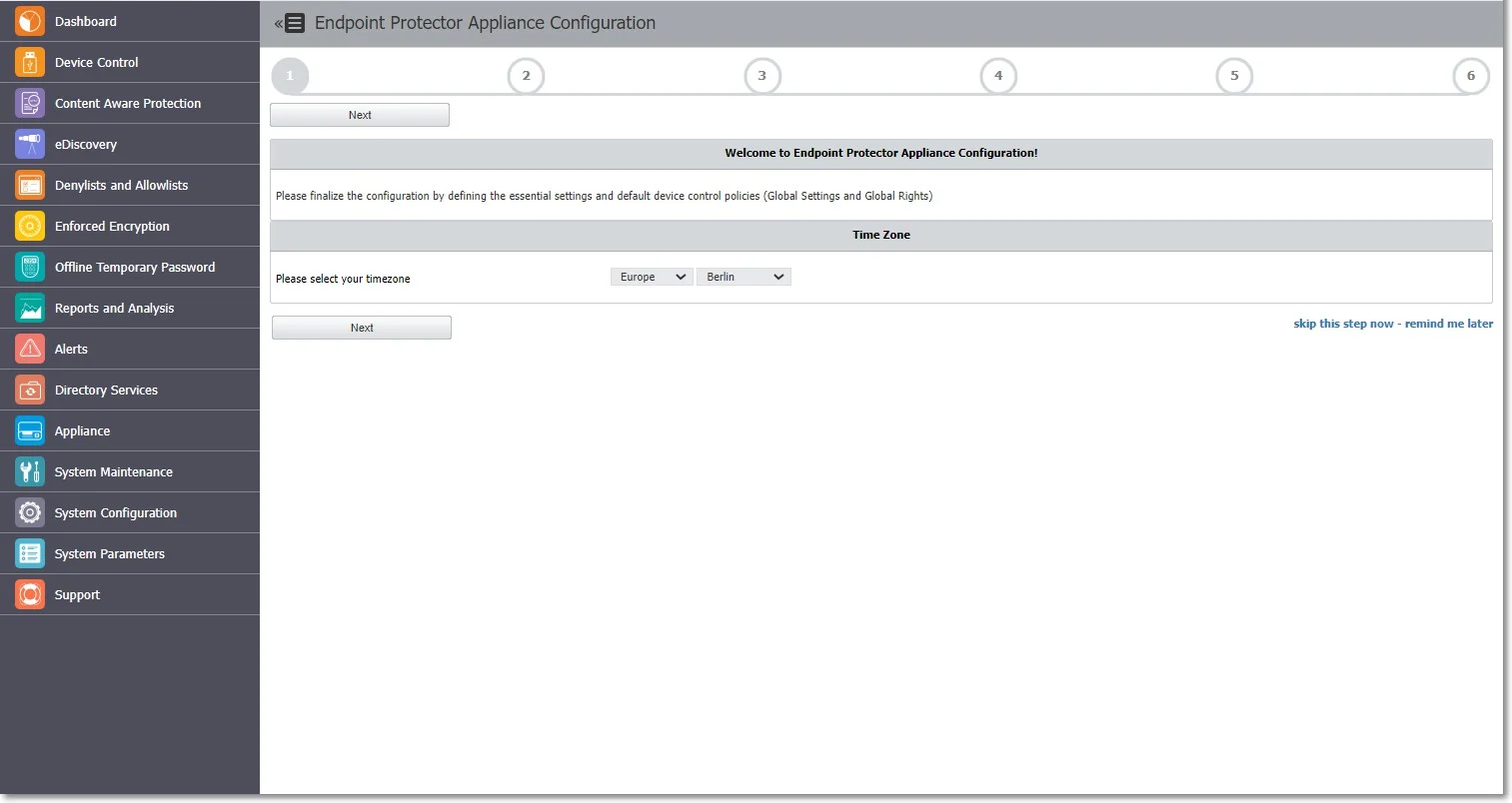
Configuration Wizard
The Configuration Wizard provides you with several steps to define basic settings. These include setting up the Server Time Zone, importing Licenses, Server Update or uploading Offline Patches, Global device rights, E-mail Server settings, Main Administrator details, etc. You can change these settings at any time.
The Configuration Wizard is available only if you have never configured the basic settings for Endpoint Protector.
As an additional security measure, the session times out after 300 seconds (5 minutes) of inactivity. If you aren't active for this amount of time, a notification appears indicating the session will expire, and Endpoint Protector logs you out unless you select to continue the session.
You can customize the session timeout and timeout counter in System Configuration.
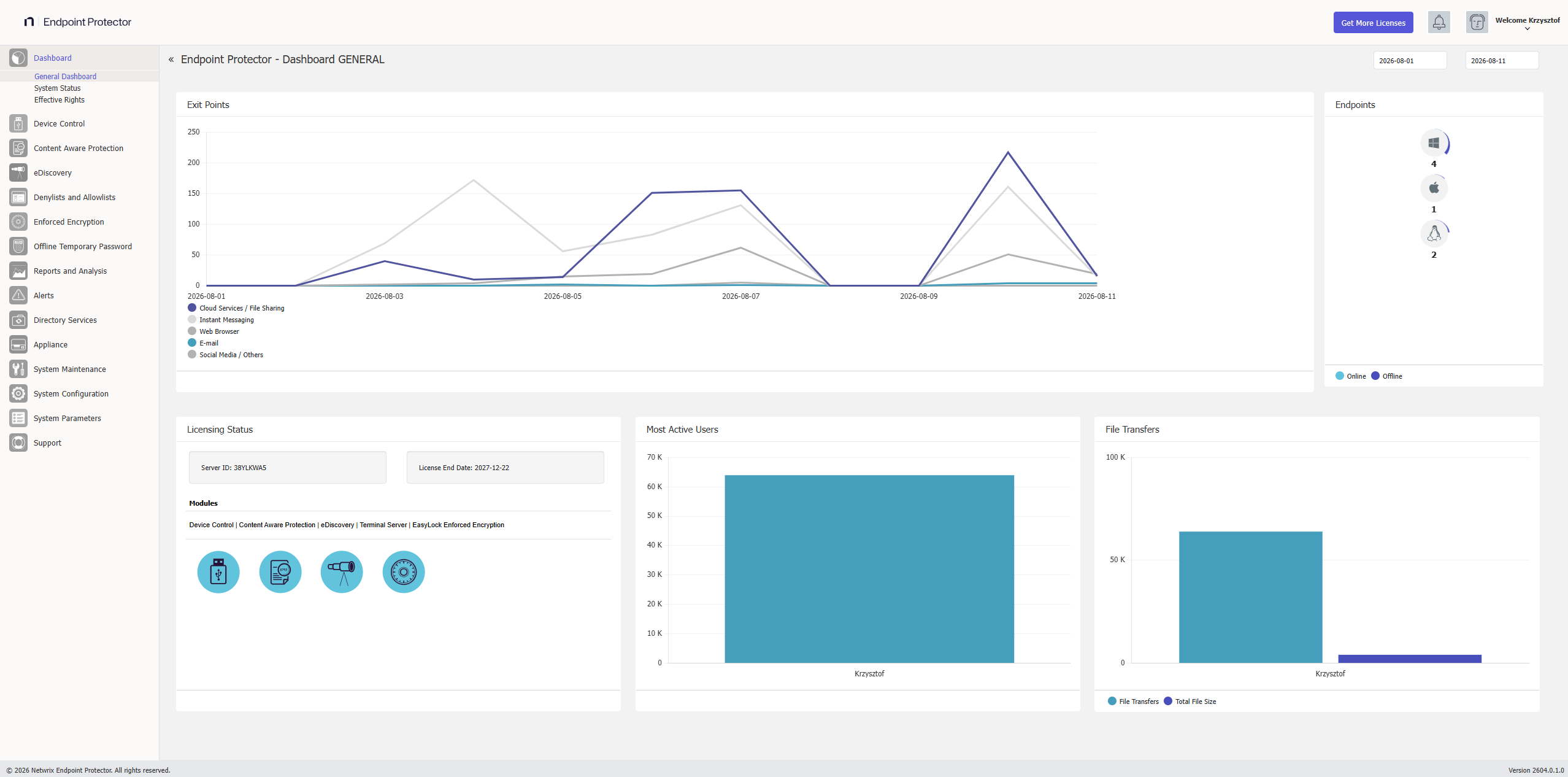
General Dashboard
In this section, you can view general information as graphics and charts related to the most important activities Endpoint Protector logs.
You will view more specific dashboards on the Device Control, Content Aware Protection and eDiscovery sections.
System Status
In this section, you can view general information about the system’s functionality, alerts, and backup status.
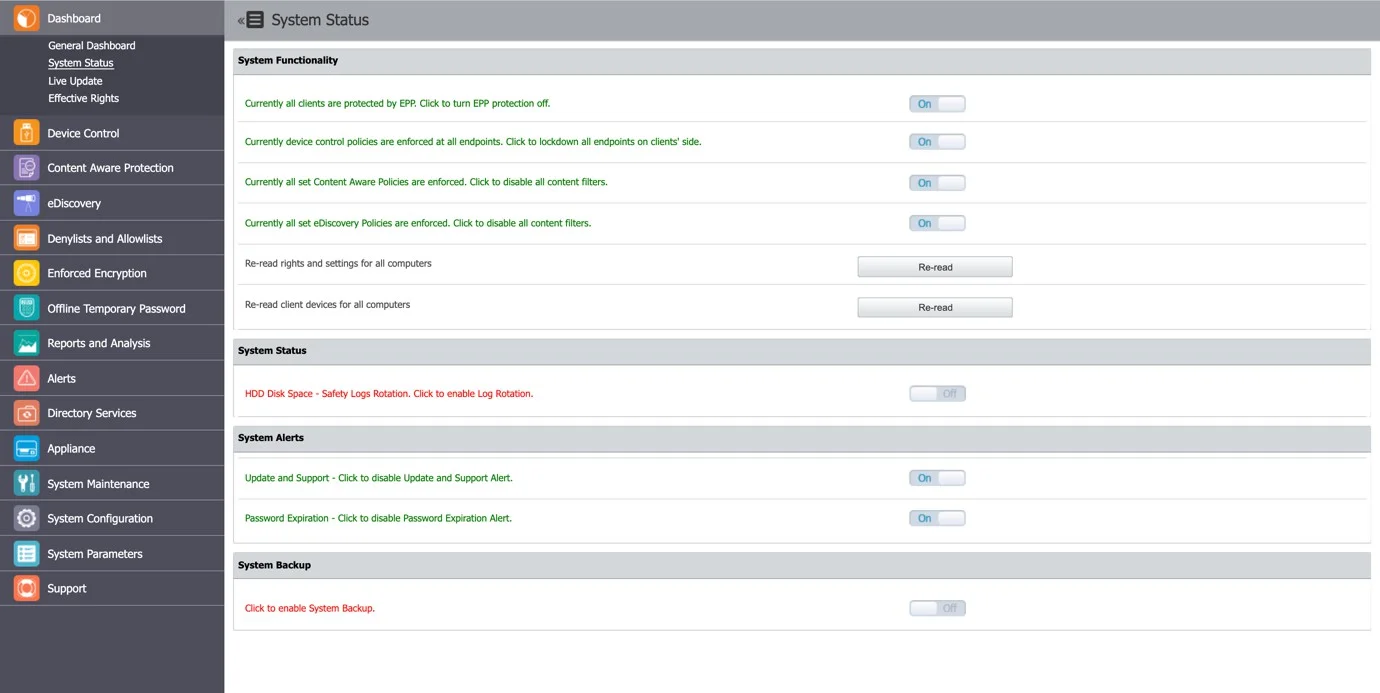
From the System Functionality section, you can enable Endpoint Protector or specific modules (Device Control, Content Aware Protection, or eDiscovery).
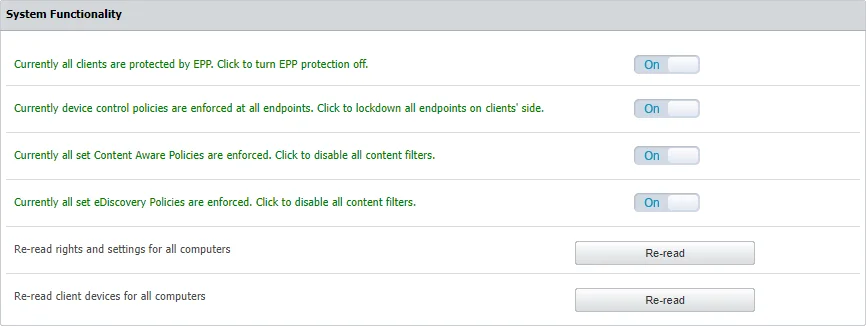
From the System Status subsection, you can enable the HDD Disk Space and Log Rotation.
If you enable this setting, when the Server’s disk space reaches a certain percentage (starting from 50% up to 90%), new logs automatically overwrite the old ones.

From the System Alerts subsection, you can enable important alerts notifying the expiration of the APNS Certificate, Updates, and Support or Passwords.
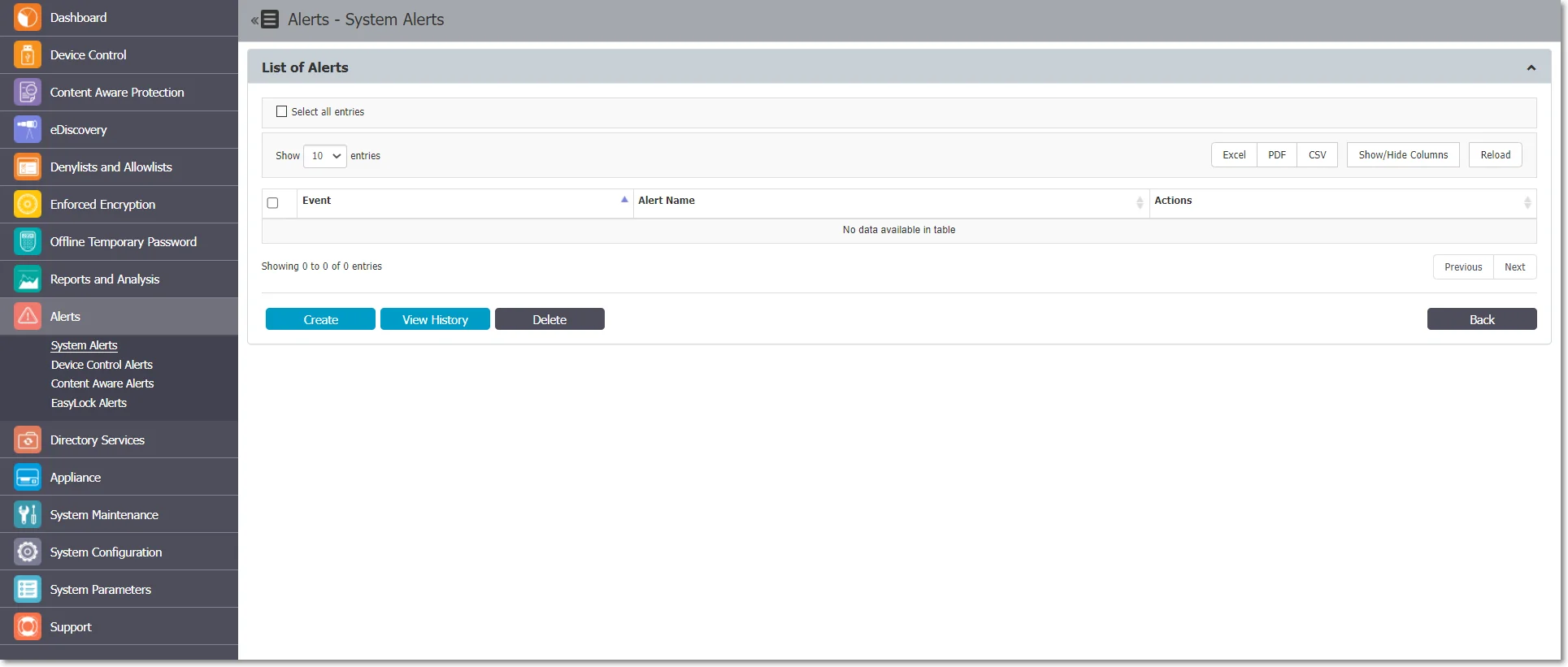
From the System Backup subsection, you can enable the System Backup.

Effective Rights
In this section you can view applied Device Control or Content Aware Protection policies. Based on the options you select from the Effective Rights Criteria form, you can view information based on rights, users, computers, device types, specific devices, report type (PDF or XLS), including Outside Hours and Outside Network Policies, and more.
After Endpoint Protector generates the report, you can download or delete it from the Actions column.