Configure Honeytoken Threats
The first step for configuring Honeytoken threats is to select a good Honeytoken username format. This is important for several reasons.
- The Honeytoken name should be convincing enough that an adversary would want to use it.
- To reduce noise, the username format shouldn't match (in part or in full) another user, group, or computer account in your environment.
- Token usernames are limited to 20 characters, and follow the validity rules for a regular Active Directory username.
The next step is to configure LDAP monitoring for Honeytokens.
Configure LDAP Monitoring for Honeytokens
Adversaries may attempt to perform LDAP reconnaissance for users whose hashes they discover. To detect this activity in Threat Manager, configure LDAP monitoring for the Honeytoken username in Threat Manager or Activity Monitor.
Obtain the LDAP Monitoring Configuration String
Step 1 – From the Threat Manager homepage, navigate to the Configuration menu and select Policies.
Step 2 – On the Policies page, expand the Honeytokens list and select the related Honeytoken policy from the Policies list. Or, select the policy from the Policies table in the Overview box.
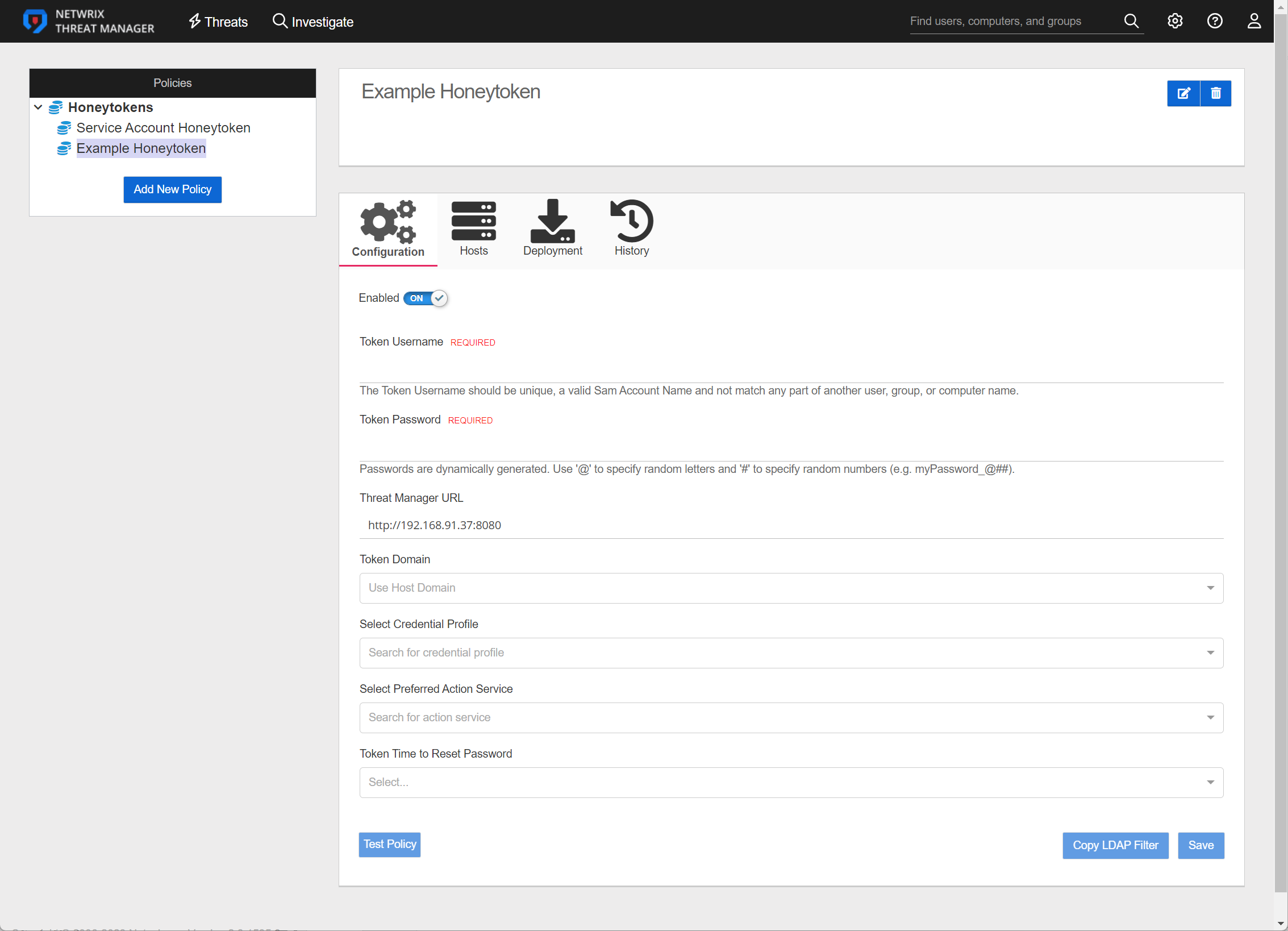
Step 3 – On the Configuration tab of the policy, fill in the requested information and click Copy LDAP Filter. The Copy LDAP Filter button copies the exact string required for Activity Monitor or Threat Prevention to the clipboard to configure the LDAP events for this Honeytoken.

A notification appears and the filter is saved to the clipboard.
Configure LDAP Monitoring
Step 4 – In the Threat PreventionAdministration Console , go to Templates > Netwrix Threat Manager > Netwrix Threat Manager for AD LDAP.
Step 5 – Click the Event Type tab.
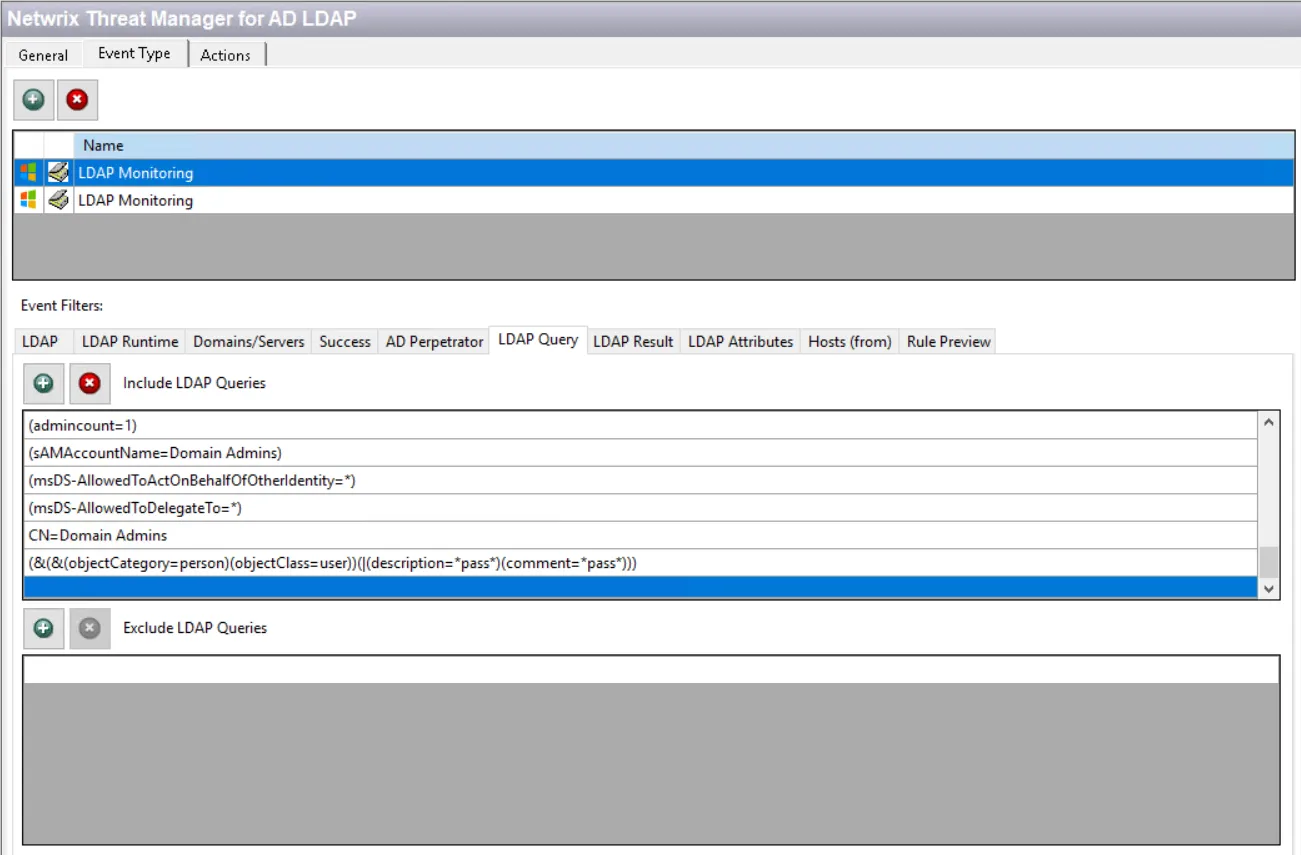
Step 6 – Under Event Filters select LDAP Query. If the Include LDAP Queries list is empty, select the other LDAP Monitoring event type in the list.
Step 7 – Scroll to the bottom of the Include LDAP Queries list.
Step 8 – Select the line below the last existing query filter and paste the string copied from Threat Manager.
Remember, the Honeytoken tab of the Netwrix Threat Manager Configuration Window must be configured to successfully send LDAP monitoring data to Threat Manager.
Configure LDAP Monitoring in the Activity Monitor
LDAP Monitoring is disabled by default. Enable it in the Monitored Domains tab.
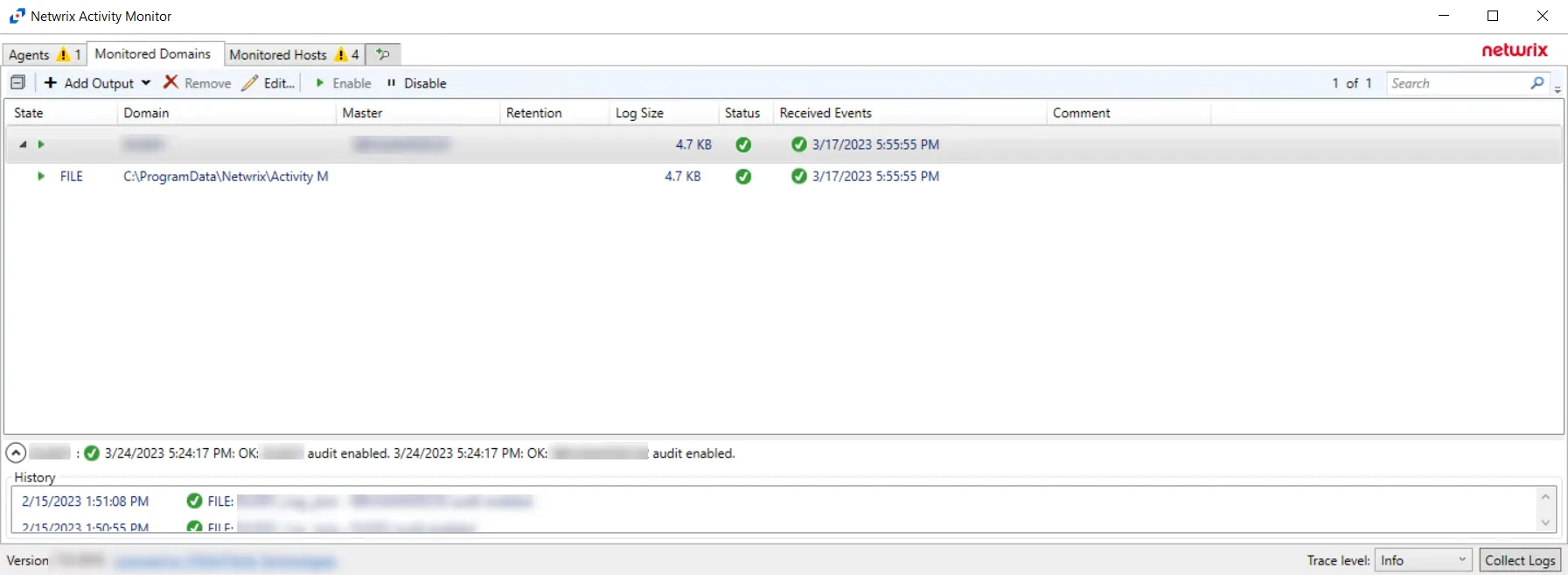
Step 9 – In the Activity Monitor, click the Monitored Domains tab.
Step 10 – Select a domain and click Edit.
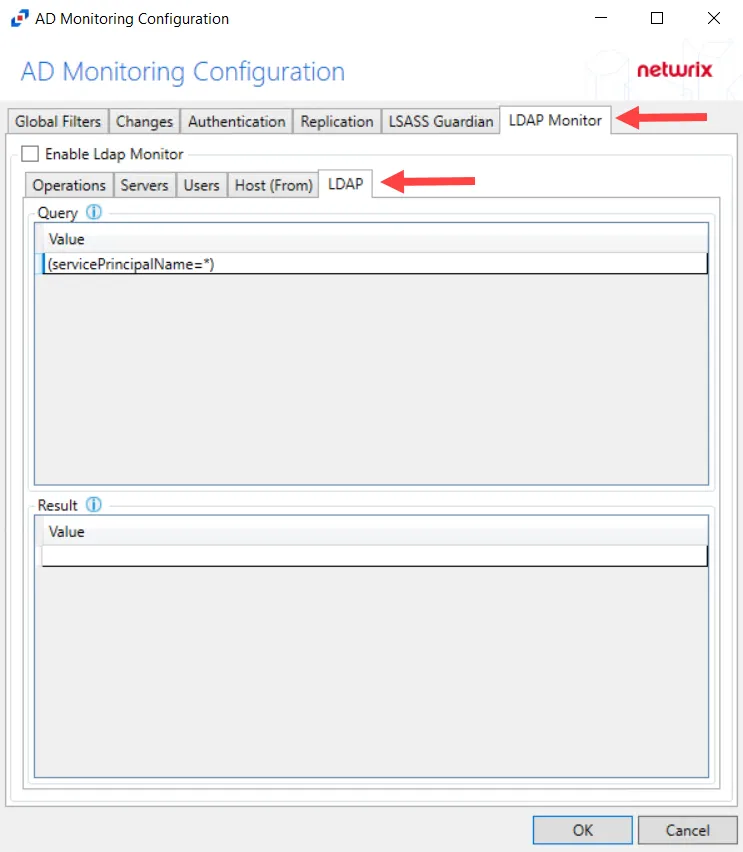
Step 11 – Select the LDAP Monitor tab.
Step 12 – Select the LDAP tab.
Step 13 – In the “Query” section, double-click the blank line below the last filled in line.
Step 14 – Paste the string copied from Threat Manager and press Enter.
LDAP monitoring has been configured for Threat Manager.