File System Enterprise Auditor Event Type
Use the File System Enterprise Auditor event type to send File System activity to Netwrix Access Analyzer (formerly Enterprise Auditor).
The event filters for the File System Enterprise Auditor event type are:
- File System Enterprise Auditor
- File System Agents
- Processes and Configuration
- Perpetrators to Exclude
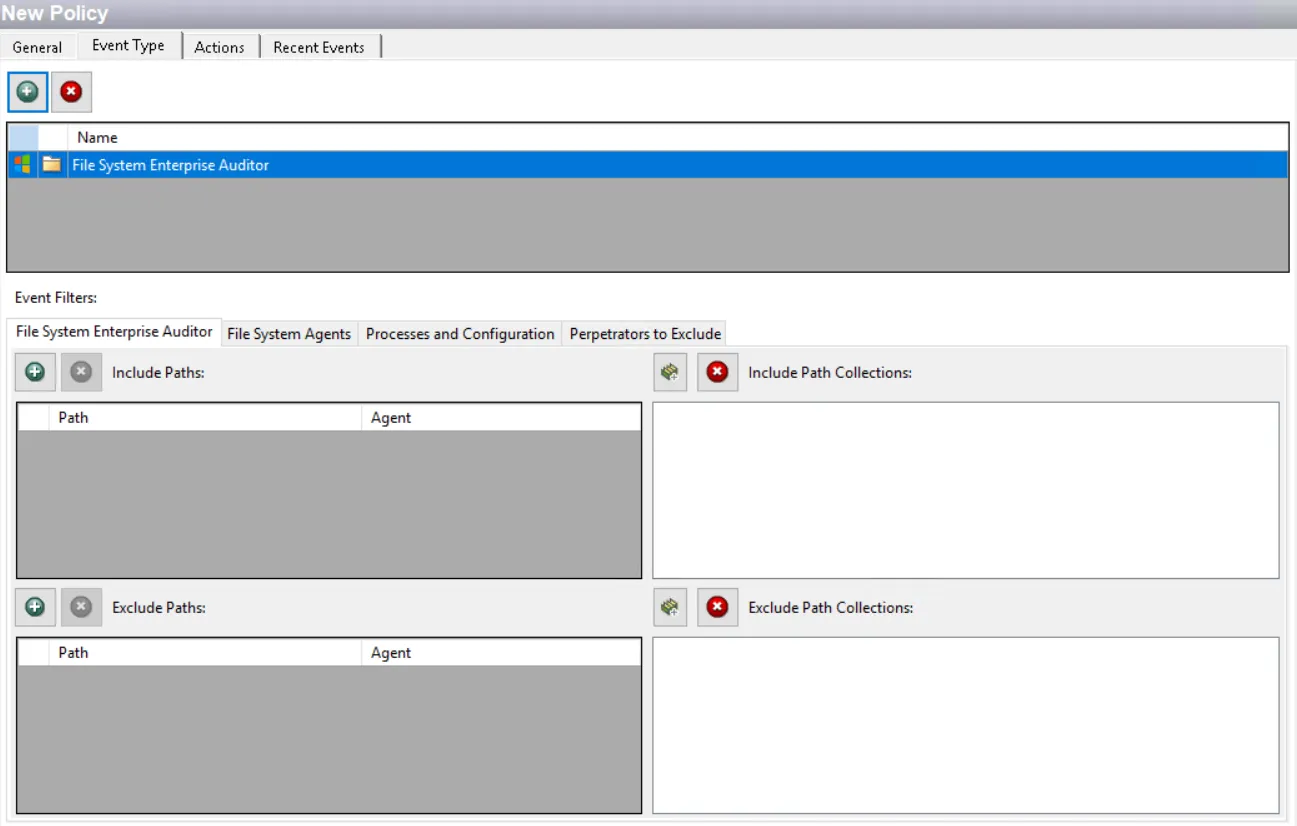
Each filter tab acts like an "AND" statement for the filter. Threat Prevention treats any filter tab left blank like an "ALL" for that filter set.
This event type specifically captures Windows file system activity events for consumption by Netwrix Access Analyzer (formerly Enterprise Auditor), formerly StealthAUDIT.
Threat Prevention doesn't capture these events in its database; instead, it collects them in a data file that the File System collection can read. See the File System Solution topic in the Netwrix Access Analyzer Documentation for information on this collection component.
Event data collected by the policies with either the File System Changes Event Type or the File System Lockdown Event Type are also available for consumption by Netwrix Access Analyzer (formerly Enterprise Auditor) if the same policy uses the File System Enterprise Auditor event type.
File System Enterprise Auditor Filter
Use the File System Enterprise Auditor filter to set the scope of the policy to only monitor specific file system paths or to exclude specific file system paths from monitoring.
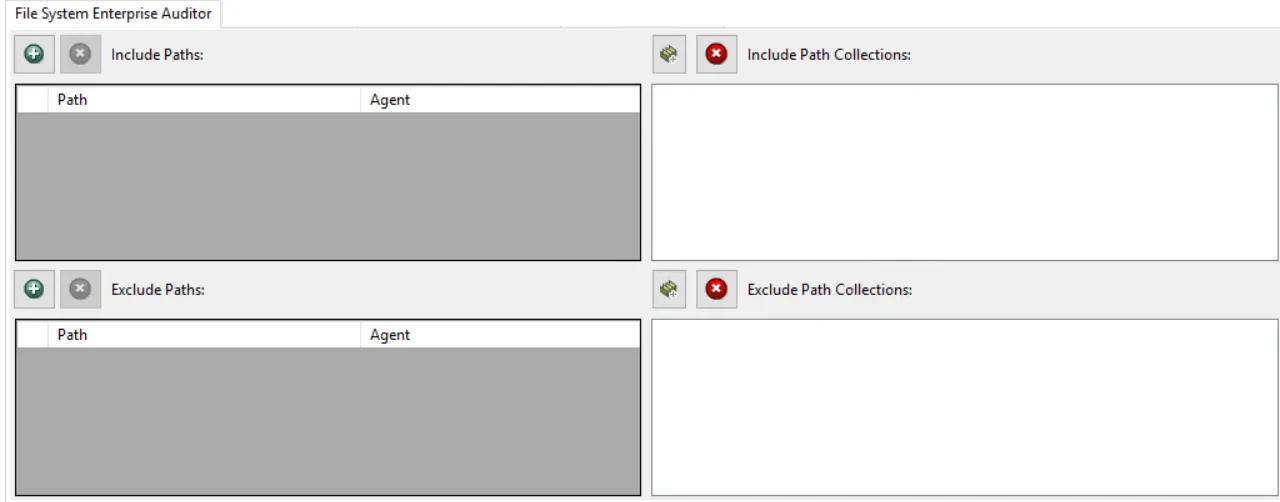
The Include Paths section defines the top level folder or individual files for monitoring. Use the Exclude Paths section to refine and remove any child items from monitoring. Any files or folders you exclude must be a subset of a folder identified in the Include Paths section. This is also where you add the NAS device paths.
Use the buttons in the Include Paths, Include Collections, Exclude Paths, and Exclude Collections areas to edit the lists.
- The Path Add (+) button opens the Select File System Objects Window.
- The Collection button opens the List of Collections Window to the appropriate Collection category.
- The Remove (x) button deletes the selected items from that box.
To enable a Dynamic Policy, use the Collection button to select the applicable Dynamic Collection. See the Dynamic Collections topic for additional information.
Sub Folder

When you add paths, a Sub-Folder checkbox displays. If checked, the filter applies to the parent and all child content (files and folders). If unchecked, the filter applies only to the listed folder and its first-level contents.
File System Agents Filter
Use the File System Agents filter to set the scope of the policy to specific Agents and/or domains.
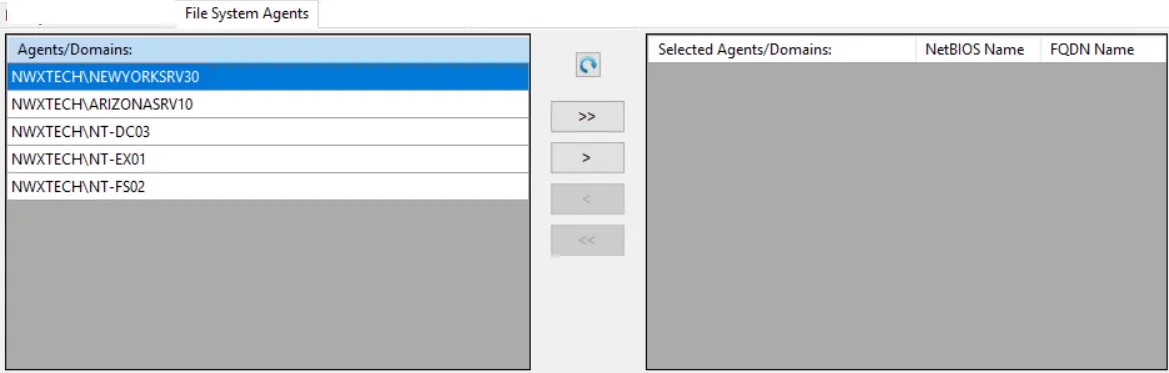
The Agents/Domains list on the left displays available Agents and domains. The Selected Agents/Domains list on the right displays Agents and domains included in the policy.
-
Use the Refresh button to update the lists.
-
Use the arrow buttons to move individual Agents and/or domains between the lists.
- The single arrow buttons will move the selected item to the other list.
- The double arrows will move all items to the other list.
There is no impact if a selected path doesn't exist on the server where an Agent resides.
When you add a domain to the Selected Agents\Domains list, the policy includes all Agents deployed in that domain. If you specify a domain, the policy also includes any Agent later installed in that domain.
There must be at least one Agent in the Selected Agents/Domains list for policies using the File System Enterprise Auditor Event Type.
Processes and Configuration Filter
Use the Processes and Configuration filter to set the scope of the policy to include Read operations and exclude specific processes from monitoring. You can also set the number of days to retain the activity logs.

- The Record Read Operations checkbox is checked by default. To configure the policy to ignore read operations, uncheck this option.
- In the [Number] Days to Retain Log box, specify a number to indicate the number of days the logs remain before Threat Prevention deletes them.
- In the Exclude Processes area, specify any processes to exclude from monitoring by this policy. Enter the process in the Exclude Processes textbox. You must enter a process name exactly as is; for example, as it appears on the Details tab of Windows Task Manager. For example, to exclude the Windows Explorer actions like opening and closing of files, enter ‘explorer.exe’ in the textbox.
Perpetrators to Exclude Filter
Use the Perpetrators to Exclude filter to exclude specific security principals committing changes from monitoring.

Use the buttons above the Exclude Perpetrators and Exclude Collections areas to edit the lists.
- The Perpetrators Add (+) button opens the Select Active Directory Perpetrators Window.
- The Collection button opens the List of Collections Window to the appropriate Collection category.
- The Remove (x) button deletes the selected items from that box.